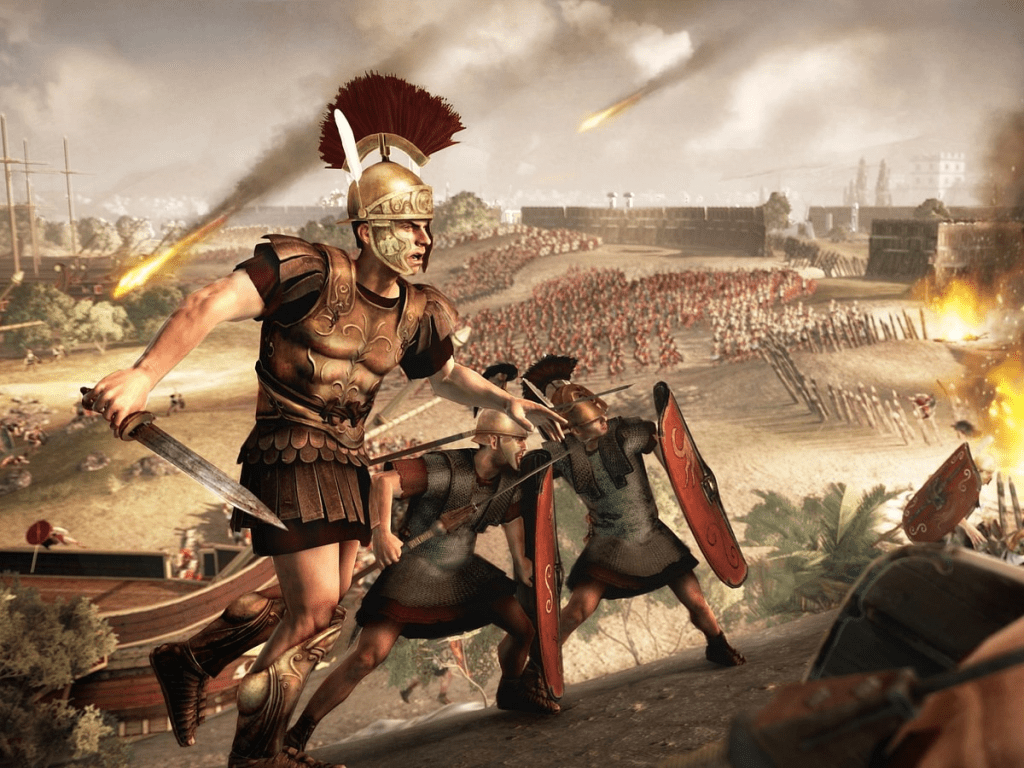
Carthage was a city state on the coast of North Africa which is now a suburb of city Tunis, the capital of Tunisia. The inhabitants of Carthage were known to Romans as ‘Poeni’ from which the adjective Punic is derived. According to legend, Phoenician Princess Dido fled from Tyre and founded the city of Carthage in 814 BCE. Carthage rapidly became a major trading centre as it was strategically located to control the trade routes between the West Mediterranean and the East Mediterranean Sea. It went on to found colonies of its own and established itself as the leading maritime power of the world.
Carthage wanted to conquer Sicily, an island just off the Italian peninsula, in order to complete the chain of island posts through which it controlled Mediterranean Sea. Rome, on the other hand, had become unquestioned master of Italy after emerging victorious in Pyrrhic War (280-275 BCE) and it did not want Sicily to be controlled by a power that could pose a threat. First Punic War (264-241 BC), the longest continuous war of the ancient world, started when Rome and Carthage were drawn into direct conflict due to dispute between two small states on the island of Sicily. In 265 BCE, soldiers from Syracuse ( a city on the east coast of Sicily) attacked Messina ( a city in northeastern Sicily) which was under the control of a band of mercenaries from Campania in Italy who were known as Mamertines. Mamertines first appealed to Carthaginians for help who obliged by establishing a garrison in the city. However, they swiftly changed side and accepted Roman forces. Romans expelled Carthaginians from Messina. Carthage responded by forming an alliance with Syracuse and besieging Messina. The siege was broken when troop reinforcements from Rome landed at Messina and defeated the Carthaginian and Syracusan armies. Romans then attacked Syracuse itself. Hieron II, the ruler of Syracuse, surrendered and was allowed to remain in power on agreeing to become an ally of Rome. Romans realized that a peace settlement at this juncture would leave much of Sicily at the mercy of Carthage and for them the object of war had evolved from assisting an ally to conquering Sicily. In 263 BCE another city Segesta switched sides and became an ally of Rome. In 262 BCE, Romans defeated a large Carthaginian army to take the city of Acragas, an ally of Carthage. Despite these early successes of Rome, the war was becoming a stalemate due to naval superiority of the Carthaginians. To conquer the island of Sicily, Rome needed a navy capable of the job of preventing continual reinforcement of the enemy and ensuring uninterrupted supply of food and provisions for its own land forces.
By 260 BCE, Romans managed to construct a fleet of 20 triremes and 100 quinquereme warships by copying the design of Carthaginian vessels they had managed to capture earlier in the war. Romans also added innovation to the existing design of the warships which allowed them to leverage their land combat skills. They introduced the corvus on their warships – a bridge approximately 4 feet wide and 36 feet long with heavy spikes on the underside. When lowered onto an enemy ship, the corvus allowed heavy infantry unit to board them making naval combat more like a land battle. This innovation negated the superior seamanship of Carthaginians. Rome attained dominance in Sicilian waters when its navy defeated Carthaginian fleet at the Battle of Mylae ( present day Milazzo on the north coast of Sicily) in 260 BCE. Roman navy repeated its success at Sulci in 258 BCE and in 256 BCE a large naval fleet set sail from Ostia (seaport of ancient Rome) with a plan to land Roman army on African soil. Carthage caught wind of the plan and intercepted the Roman navy at Cape Ecnomus. Romans emerged victorious in the naval battle and followed it up by landing its army at the city of Apsis in Tunisia. Roman army quickly captured this city and then advanced to within 10 miles of Carthage. Carthage sued for peace but the terms offered by Romans were too harsh. Carthaginians then hired a Spartan mercenary Xanthippus to reorganise its army and plan the defence of its territory. Xanthippus inflicted a crushing defeat on Romans by making full use of his superior cavalry in combination with war elephants. A Roman fleet was sent to evacuate survivors which encountered a major storm on the return trip to Italy losing most of its ships. More than 100,000 men drowned taking down with them Rome’s hope of invading Carthage and forcing a quick end to the war. Sicily once again became the main battlefield of the war.
This long-drawn-out war had been taking heavy toll on both the sides in terms of finances and fighting men. Undaunted, the Roman senate raised private money to build a new fleet of 200 ships with vastly improved design. In 241 BCE, Carthage sued for peace despite holding the cities of Lilybaem and Drepana in Sicily when its navy got soundly defeated near the Aegates Islands. First Punic War ended with the Treaty of Lutatius. Carthage ceded Sicily to Romans and also agreed to pay an indemnity of 3200 talents ( approximately 81 tons of silver) over ten years. Rome, a land power, emerged victorious against a maritime power by becoming a maritime power itself.

 Pages from History