Concepts of natural rights of people were an integral part of American revolution ideology and therefore, continuation of slavery in independent America presented a profound paradox. The existence of slavery in America contradicted its Declaration of Independence in 1776 which contains the words: “We hold these truths to be self-evident, that all men are created equal, that they are endowed by their Creator with certain unalienable Rights, that among these are Life, Liberty and the Pursuit of Happiness”. The members of the Continental Congress recognized that the Declaration of Independence was going to result in war with England and that if the American colonies were not united, they would not be able to face the military might of the Great Britain. Northern and Southern States of America were divided over the issue of slavery. Northern states wanted to abolish slavery but the Southern States wished to continue it because their agrarian economy depended upon slave labour. Independence was too big an issue to be jeopardized for the sake of abolition of slavery. As a compromise, the power to regulate slavery was left to the individual states. The price of freedom from England was continuation of slavery of African Americans.
As expected, with the adoption of Declaration of Independence by the Continental Congress, full-fledged military conflict broke out between Great Britain and the American colonies. The combined forces of American colonies with their French allies inflicted a decisive blow on the British army in the Battle of Yorktown in 1781. It was the last major military engagement of the American Revolution but the official announcement of peace and recognition of the United States of America as an independent nation came in 1783 with the signing of Treaty of Paris. Very soon after independence, the issue of slavery started troubling the relationship between Northern and Southern States of America. The notorious three-fifths clause in the American constitution had given disproportionate political power to Southern states. This clause declared that any person who was not free would be counted as three-fifths of a free individual for the purpose of determining congressional representation. It did not, however, make any attempt to ensure that the interests of slaves would be represented in the government. The territorial expansion of US ignited the conflict over the question of how the new territories would be inducted into the Union- whether as free ( slavery banned) or slave (slavery allowed) states.
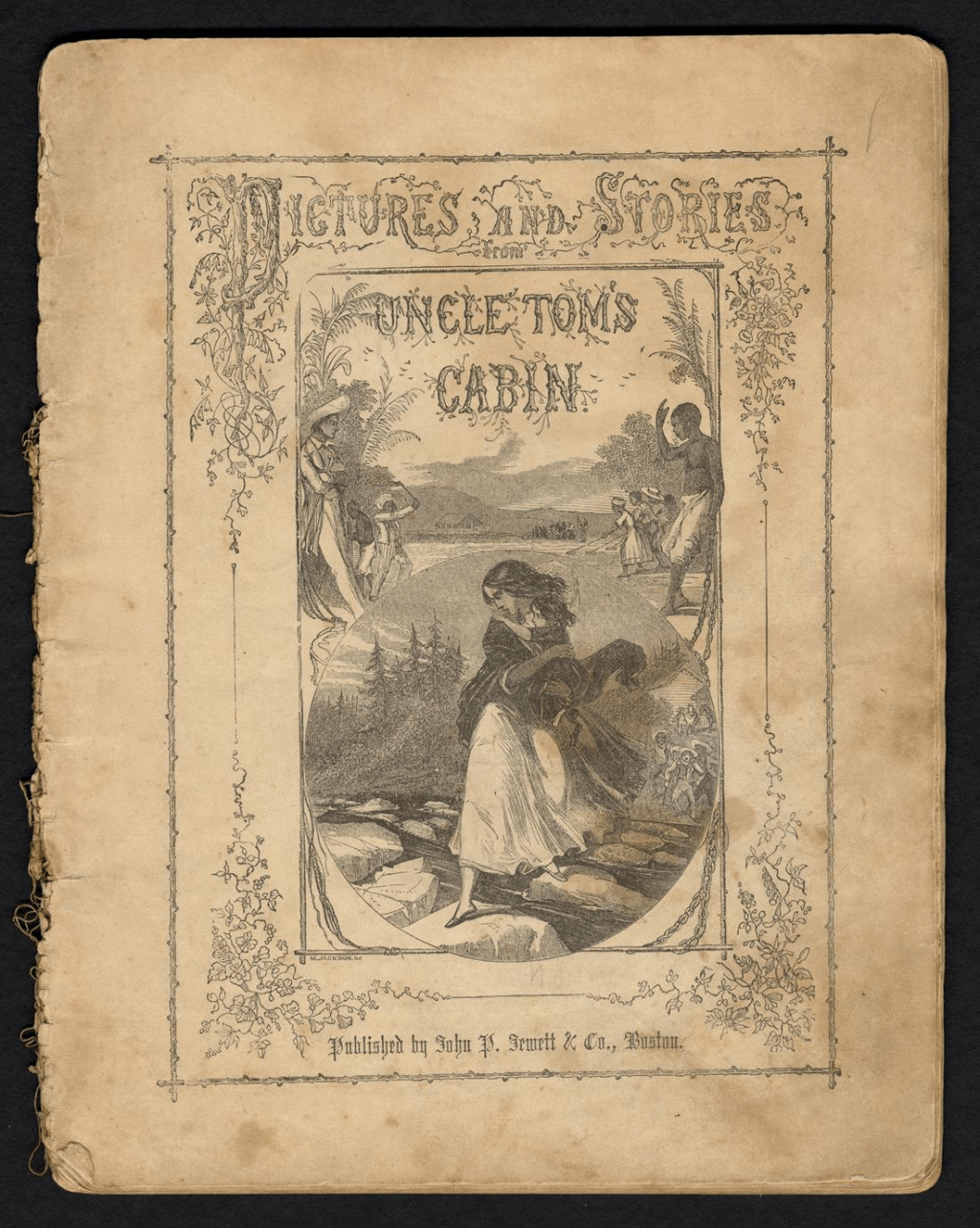
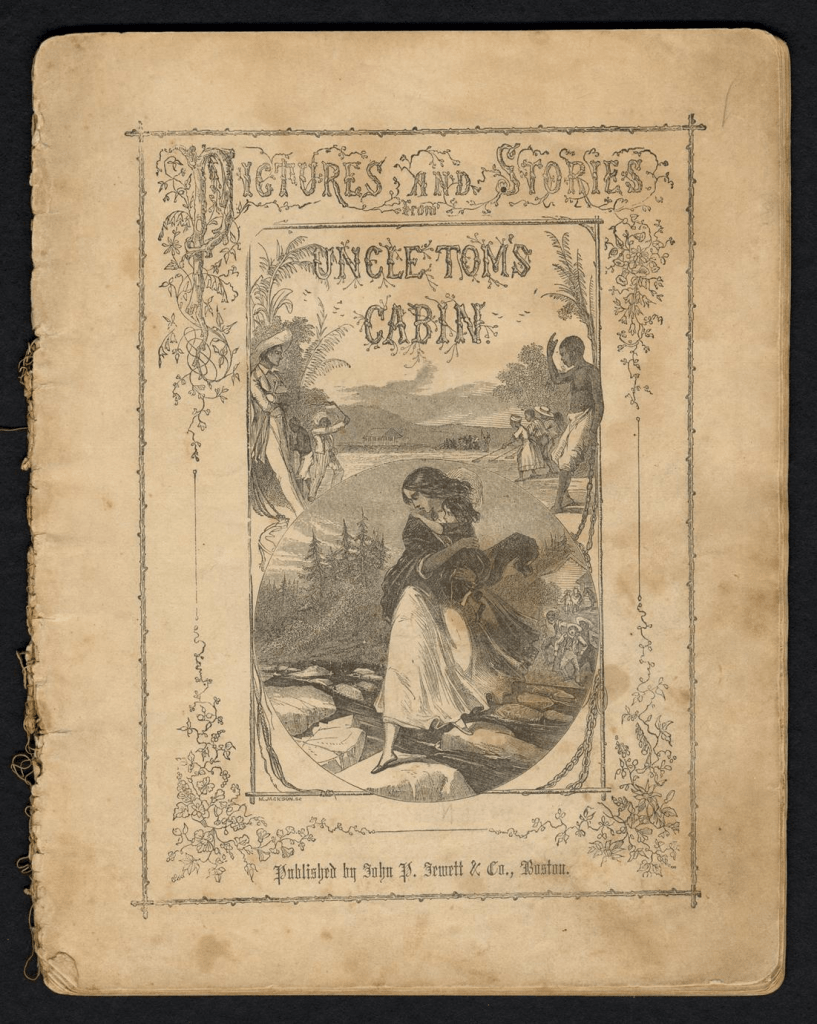
The anti-slavery sentiments in the North became hardened by the campaign of an abolitionist newspaper ‘The Liberator’ against the institution of slavery. The Fugitive Slave Act of 1850 further hardened the sentiments. It required slaves to be returned to their owners even if they were in a free state. Assisting escaped slaves became illegal and it also made federal government responsible for finding, returning and trial of the escaped slaves. In 1852, an anti-slavery novel ‘Uncle Tom’s Cabin’ written by Ms. Harriet Beecher Stowe was published which is believed to be one of the many events that put America on the road to the civil war. The popularity of this book can be gauged by the fact that in the USA it became second best-selling book of 19th century after Bible. The story first appeared as a 40 week serial in an abolitionist newspaper ‘National Era’ and then it was published as a novel in 1852. She excelled all other assailants of slavery by presenting to her readers a succession of poignant events embedded in the system of slavery such as the parting of husband and wife, baby snatched and sold away from the breast of its mother, the cruelties of bad slave owners etc. The book got translated into all major languages of the world and was read with passion and emotion in every country. It was the herald of the storm.
In 1857, the Supreme Court of the USA delivered its judgement in the famous case of the slave Dred Scott versus his master, Sanford. Scott had been taken by his master from Missouri (slavery allowed) to the free states of Illinois and then to Wisconsin. He moved the court for his freedom on the grounds that his residence in the free states had made him a free man. The Court decided against the slave Dred Scott on the ground that an African American was not a citizen in the eyes of the Constitution which was made for white men only. It declared Missouri compromise unconstitutional and went further to state that an African American could never be citizen of the USA. The attempt of the Supreme Court to impose judicial solution on a political problem proved to be disastrous. It further inflamed passions and brought the Union closer to dissolving. The savage struggle between pro and anti slavery forces continued and it brought into prominence a new figure in the national politics – Abraham Lincoln.
Abraham Lincoln was chosen as the Republican candidate in the fateful Presidential election of 1860. Republican Party had been formed in 1854 by forces opposed to the expansion of slavery and Abraham Lincoln’s opposition to the institution of slavery was more vigorous than any other contemporary political leader. When Lincoln won the election, seven Southern States carried out their threat of secession from the Union and organized themselves as Confederate States of America. Within weeks, four more Southern States joined the Confederacy. On April 12, 1861, Confederate forces opened fire on Fort Sumter in South Carolina and captured it after 34 hours of bombardment. Curiously, no blood was shed in this first encounter of what would be the bloodiest war in the US history but the awful act of rebellion had occurred. It was the beginning of the civil war in America. After four years of bloody conflict, the Federal forces eventually forced the surrender of Confederacy on 9 April, 1865.
Ms. Harriet Beecher Stowe had met President Abraham Lincoln in December, 1862. The purpose of her meeting was to discuss and convince the President to issue ‘Emancipation Proclamation’ in rebel states. According to some biographers of Ms. Stowe when Lincoln was introduced to her, he said “Is this the little woman who made this big war?” Lately, many scholars have described this quote as apocryphal, invented by Stowe family members. Regardless, the words have that ring of truth like so many historical misquotes. If Abraham Lincoln didn’t really say these words, he should have.


 Pages from History